
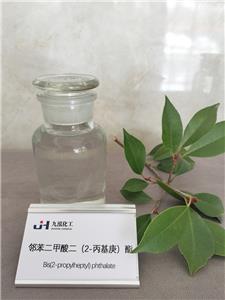
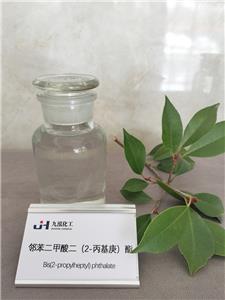
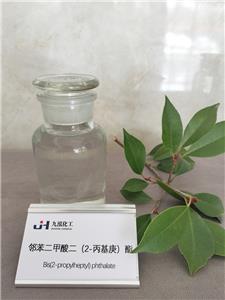
Knowledge Popularization for Dioctyl Phthalate
From a molecular configuration perspective, dioctyl phthalate belongs to the phthalate ester class of compounds, featuring a rigid benzene ring and two flexible long-chain alkyl ester groups within its molecule. This flexible yet rigid structure enables it to intercalate between polymer chains, weakening their intermolecular interactions and thereby reducing the material's glass transition temperature. The ester group length and esterification degree directly affect the compatibility with different polymers, while the octyl chain length provides a moderate balance between polarity and hydrophobicity.
In terms of physicochemical properties, this substance exists as a viscous liquid at room temperature, exhibiting extremely low volatility and water solubility. Its boiling point is typically above 380 degrees Celsius, with a flash point of approximately 192℃, indicating that it is not easily vaporized under normal operating temperatures. It has a slightly lower density than water and is miscible with most organic solvents, but its miscibility with polar solvents such as alcohols varies significantly with temperature. These properties make it easy to uniformly disperse in the polymer matrix during processing.
In the field of material modification, this substance mainly plays a role in reducing the internal energy accumulation between polymer molecules. When added to high polarity polymers such as polyvinyl chloride, the ester groups interact with the polar groups of the polymer chains in a dipole manner, while the long alkyl chains provide spatial isolation, making the polymer segments more easily mobile. This effect not only improves the flexibility of the material at low temperatures, but also affects the rheological behavior of the melt during processing, reducing processing energy consumption. The application in non-polar polymers such as rubber relies on their swelling effect, which softens by penetrating into the gaps of the polymer network.
Based on its functional characteristics, this substance is irreplaceable in multiple industrial branches. In the production of flexible polyvinyl chloride products, such as insulation layers for wires and cables and soft sheets, the addition ratio directly affects the bending life and low-temperature performance of the products. In the field of sealing materials, specific formulations of adhesives and sealants rely on their ability to regulate curing speed and final modulus. In industrial coatings, the film-forming agent function is utilized to improve pigment dispersion and coating weather resistance. These applications are based on a precise understanding of the phase diagram and kinetic behavior of polymer plasticizer systems.