
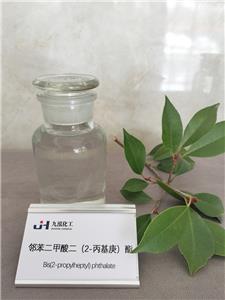
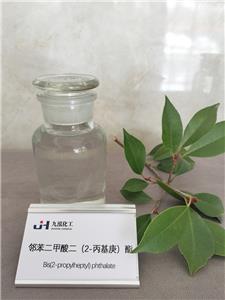
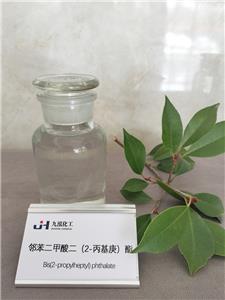
Introduction to Bis (2-propylheptyl) Phthalate
Bis (2-propylheptyl) phthalate (abbreviated as DPHP) is produced by the esterification of phthalic anhydride with 2-propylheptanol in the presence of an acidic catalyst, followed by neutralization, water washing, and distillation. DPHP is a high-performance and environmentally friendly main plasticizer with the molecular formula C28H46O4 and CAS number 53306-54-0. Due to its high molecular weight, extremely low volatility, and migration resistance, it is widely used as a substitute for traditional plasticizers such as DOP, especially in fields that require high heat and aging resistance.
The appearance is a colorless to light yellow transparent oily liquid with no or slight odor. It’s insoluble in water, but miscible with most organic solvents such as ketones, esters, and aromatic hydrocarbons. Stable at room temperature, with excellent heat resistance, hydrolysis resistance, and migration resistance; Hydrolysis can occur under strong acid and alkali conditions. DPHP has low volatility and low atomization, with volatility only one fourth of DOP, meeting the strict low atomization requirements of the automotive industry. It has excellent heat aging resistance, cold resistance, outstanding electrical insulation performance, and strong resistance to soap water leaching.
DPHP is widely used in the fields of wires and cables, automobiles, building materials, plastic pipes, etc. It needs to be sealed and stored in a cool and ventilated place, away from light, moisture, heat sources, open flames, and strong oxidants.